
I read a Nancy Gibbs essay entitled Generation Next in Time this morning and thought it offered an interesting analysis of the generation gap.
I think much of what she says is true, especially the part about how “the greatest divide of all has to do with hope and heart.” In my daily interactions at Berkeley particularly, I see this difference. It seems as though the millennial generation (born between 1982 and 2003) not only believes in, but sees the future and all of its promise. It is not content to stick with the status quo, but driven to push for change. Nothing is impossible, and instead everything is just a matter of time.
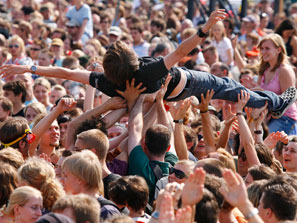
Photo by AP
There is a “hunger for community,” with unity through communication and social media. We have all become interconnected, linked, and interdependent. Thus, individual pursuits are not as important relative to collective goals as they once were. As a generation, we want to be a part of something greater than the individual.
As Gibbs sums up, millennials “know something we don’t about the inventions that will emerge from their networked brains, the solutions that might arise from a generation so determined to bridge gaps and work as a team. In that event, their vision would be vindicated, not only for themselves but for those of us who will one day follow their lead.”
The future is bright.
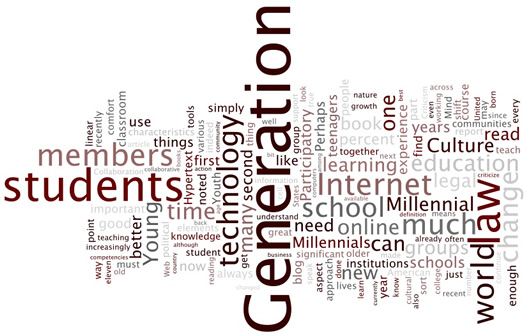
Photo from the book Law School 2.0 by David Thomson

I’m an optimist. I like to see the glass as half full, rather than half empty.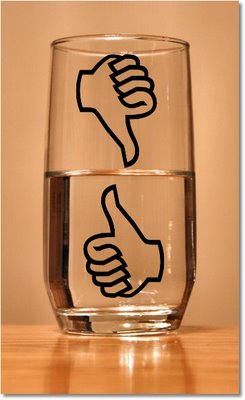
It doesn’t mean that I only focus on good news at the expense of bad news. But I believe there’s almost always a good way to look at things. I mean, there’s so many options, so why not choose a positive one?
After a quick search, I found that there actually comes a point when optimism becomes a detriment. Researchers at Duke University’s Fuqua School of Business have discovered that while optimists tend to behave in more financially prudent ways than most, extreme optimists tend to have “short planning horizons” and more frequently act in unwise ways.
Furthermore, Manju Puri writes, “The differences between optimists and extreme optimists are remarkable, and suggest that over-optimism, like overconfidence, may in fact lead to behaviors that are unwise.”
I think that if you do what you need to do and follow your heart, things will always tend to work out in the end.
I started spring break yesterday afternoon and came home to San Mateo for the week.
I love life and school in Berkeley. The campus and surrounding community is exciting and there’s always something going on, always something to do. Everything about it is awesome in many ways, but sometimes it’s nice to just take a break from it all and go home.
It’s great to be able to see my brother, mom, dad, and relatives nearby, catch up with old pals, and take a chill pill for a while. Waking up without classes to go to or meetings to attend is a great feeling. And nothing beats mom’s home cooking :)
Home is where the heart is.
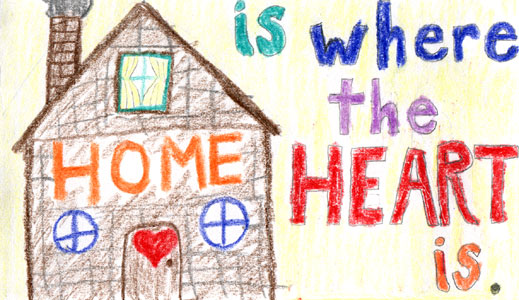
Drawing by Erika Aoyama
Over the past few days, I’ve been playing a part in a short promotional video for the upcoming Rock Your Cause benefit concert featuring Marie Digby at UC Berkeley on April 3rd.
For many of the clips, I was supposed to act sad, but it was really hard to do. I felt like I was trying to fake an emotion that I didn’t feel at the time. I couldn’t help but crack up in the middle of a bunch of shots. Looking sad is hard. I guess I’m usually a happy person :)
After trying it myself, I have a newfound appreciation for all of the actors and actresses out there who make it seem so effortless to take on different roles in shows and movies. Honestly, it feels so weird to act like someone you aren’t.
Today, I read a Change.org article entitled Giving Students in the Developing World Peer-to-Peer Loans, and learned about an organization with a noble vision. If you’ve heard of microfinance, you’ve probably heard of Kiva, which empowers individuals to lend to an entrepreneur across the globe. Vittana, a new platform for educational loans, follows a similar model.
Vittana is building a world where anyone can go to college. It partners with local microfinance organizations around the world to build student loan programs from the ground up, often providing the first and only access to college loans in the countries where we work.
Vittana streamlines the process for you to help out a student in the developing world. On their website, you simply find a student and make a loan (100% of your funds are delivered tothe student). Using your loan, the student finishes college (or vocational school), gets a degree, and then gets a job. You get paid back when the student repays the full amount of your loan. Then you can use the money to make another loan.
In most countries, student loans just don’t exist. The Vittana community is enabling students around the world to get access to higher education for the first time.
Spread the gift of education.