
I’m going to describe a situation that happened to me yesterday and has probably happened to everyone at least once before:
I was walking down the street, and someone else was heading in my direction. It looked like we were going to run into each other, so of course, we both change our paths and step to the side. Well, it just so happens, we both chose the same side. So then, we try the other side. No luck. Same thing happens. This went on for a good 3-4 times, until we both just stopped, smiled, and carefully chose different paths.
I bet we sure looked funny to the people around us, what with us juking back and forth like we were playing soccer, except with no ball. It was definitely a light moment to have with a complete stranger. And even though we were strangers, at that moment, we were totally in sync. Or totally out of sync with each other, if you look at it the opposite way.
I think at the moment where we both stopped and smiled, we realized that maybe we were both in too much of a rush, and it was a funny and subtle way to learn that maybe we ought to slow down in life sometimes. Especially in our increasingly busy world, it’s nice to have some of these simple moments to remind us to take it easy :)

As gallons upon gallons of oil continue to spill into the Gulf of Mexico every second, the problem doesn’t look like it will be going away anytime soon. Despite the supposed “success” of this week’s cut-and-cap of the hole in the pipe, it’s just getting worse. You can even watch the oil spewing from the tube in a live underwater camera. Absolutely disgusting.
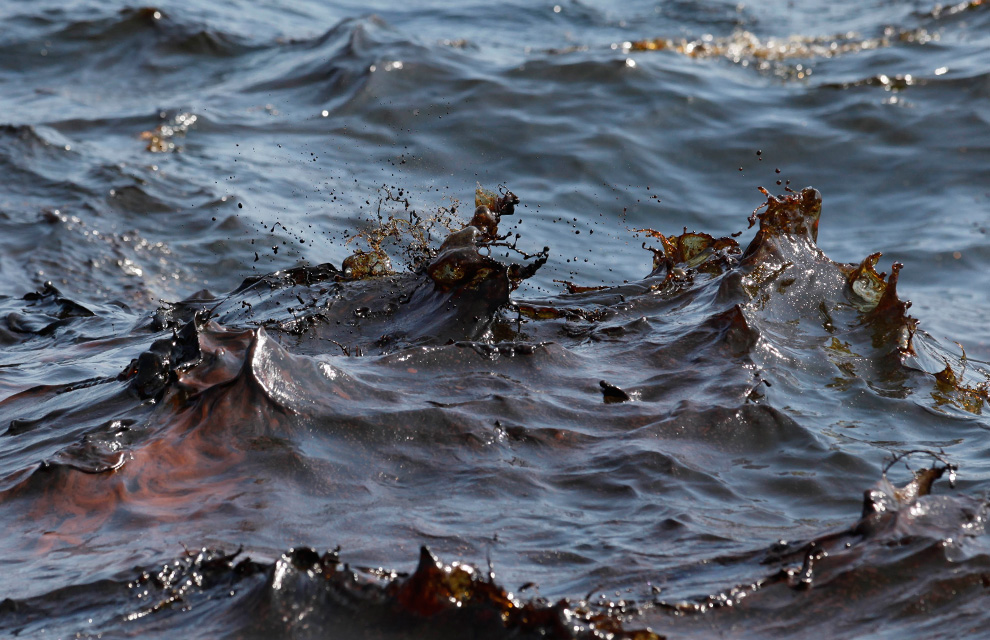
Photo by AP/Gerald Herbert
I have little confidence and fading hope in BP successfully correcting their mistake any time soon.
It’s been over a month and counting since the leak… This is going to affect the surrounding environment and wildlife for years. It’s sad to say that, on earth, humans are the most destructive of species.
As mankind, how do we allow such a devastating man-made disaster happen?

Photo by REUTERS/Daniel Beltra
In June of 2008, Amy Krouse Rosenthal started something. She posted a short film of 17 things she made, which concluded by telling that she would be in front of “The Bean” sculpture at Millenium Park in Chicago on 8/8/08 at 8:08pm, holding a yellow umbrella. She asked people to come join her as they gathered to make a cool 18th thing together.
Armed with her bright yellow umbrella, Amy met her online community at Millenium Park on 8/8/08 at 8:08pm, and this is what happened:
This film has now become the heart of Amy’s new project, “The Beckoning of Lovely.” It all started with this spontaneous public gathering of strangers and friends new and old, and has evolved into an expanding film project involving hundreds of strangers from around the world.
I think it’s inspiring to see how it only takes one person to inspire a whole group of others to come together and collaborate toward creating something good. It makes me smile :) Who knew a lovely lady with a yellow umbrella could create such warm, fuzzy feelings?
Use your own power to spread inspiration.
How present is discrimination in the US today? Maybe higher than you might think.
Check out this interesting discrimination research done by economists Jennifer Doleac and Luke Stein. Here’s a quick summary of what they did:
“Over the course of a year, they placed hundreds of ads in local online markets, randomly altering whether the hand holding an iPod for sale was black, white, or white with a big tattoo. Here is what they found: Black sellers do worse than white sellers on a variety of market outcome measures: they receive 13% fewer responses and 17% fewer offers. Conditional on receiving at least one offer, black sellers also receive 2–4% lower offers, despite the selfselected—and presumably less biased—pool of buyers. In addition, buyers corresponding with black sellers exhibit lower trust: they are 17% less likely to include their name in e-mails, 44% less likely to accept delivery by mail, and 56% more likely to express concern about making a long-distance payment.”
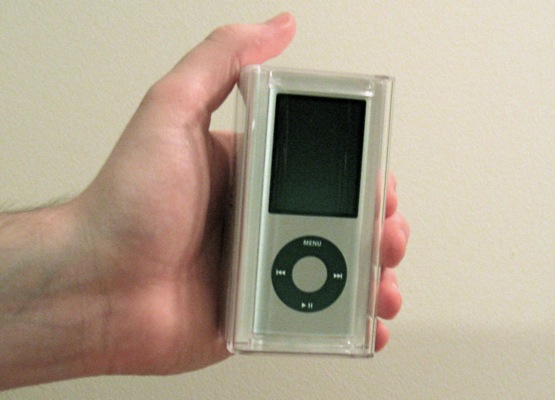
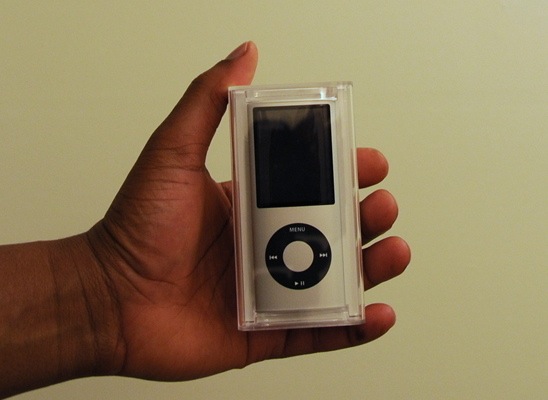
I think the set-up, a “natural field setting,” is rather creative and produces some real world observations. And boy, do those observations stand out. Racial discrimination, whether we see it plainly or not, is alive and well. This kind of research is what we can’t continue to ignore.