
Yesterday morning, I walked by protesters at Sather Gate as I walked to work. It was the March 4 Day of Action, and many students, staff, and supporters had gathered to voice their opposition to the increased fees and cuts to the public education system. Throughout the day, the group swelled to over a thousand supporters as they gathered for a rally on the intersection of Bancroft and Telegraph and eventually marched to Oakland. From where I was working in Sproul Hall, I could hear the constant chants of “No cuts, no fees, education must be free.”
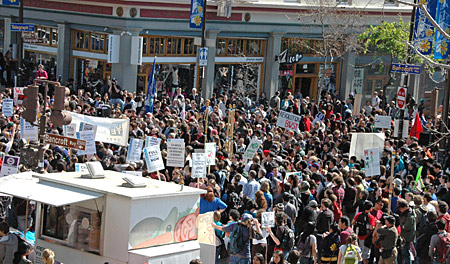
Protesters swamp the intersection at Bancroft and Telegraph for a noontime rally. (Photo by Jeffery Kahn/NewsCenter)
I think a protest is not the ideal way to come to a solution to a problem. But when people feel that their opinions are not heard and considered, a protest is all they have left. A protest is a sea of voices, heard loud and clear.
Yesterday, actions all across the state made a powerful statement. Governments must be extremely careful in making cuts to public education. Our future is at stake.
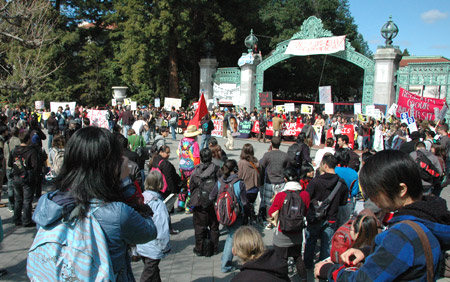
With the noon hour approaching, the crowd of pickets and passersby was growing at Sather Gate, where protesters hoisted banners spelling out their demands.

A few weeks ago, I wrote a post about being tall.
Just as a follow-up, if you’re interested, here’s an interview from the Freakonomics blog with Arianne Cohen, author of The Tall Book. I haven’t gotten a chance to crack open the book yet, but it’s definitely on my reading list.
Some highlights from the interview:
- Most products–everything from clothing to bus seats to lawn mowers to couches–are designed to fit people in the 15th-85th percentile or 10th-90th percentile. Companies could profit greatly by meeting the needs of the 35% who don’t fit a size medium.
- There’s a lot of money to be made there.
- Some statistics:
- Tall people consistently make more money (to the tune of $789 more per inch per year)
- Tall people have slightly higher IQs (because the same childhood environments that produce healthy bodies also produce healthy brains)
- tall people live a bit longer (no one knows why)
- The Netherlands is tall heaven. It’s the world’s tallest country, where men average 6’0?, and women 5’7?. The fact that the Dutch are three inches taller (a huge margin in height research) is attributed to the country’s far superior childhood and prenatal environments. Height is a very sensitive indicator of nutritional and health well-being. Americans have a per capita income roughly $10,000 greater than the Dutch, but that extra income is not spent on well-being in America.
- Thank you mom and dad for feeding me well as I was growing up :)
Height is such a defining experience…
More: Tallest
As I was walking home in a downpour today, a stranger stopped me and asked me for directions. I gladly pointed her in the right way and then we parted ways. But she didn’t say “thank you” or show any bit of gratitude, and that kind of irked me a little bit.
I know I shouldn’t expect to get a “thank you,” but it caught me by surprise. Instead of getting that warm feeling inside from helping her, I thought about how she didn’t appreciate what I did. Don’t get me wrong, I don’t help others to collect “thank yous” or for recognition, but it would have made the whole interaction much better if those two simple words were exchanged.
A contrast to this situation happened about three blocks prior. I gave someone a thank you card for her and her organization’s help in supporting Cal Do Something’s Jeans for Haiti Drive. She was so happy to receive the card and even thanked me for giving her the opportunity to help. This interaction left both parties with a smile and makes me want to work with her again in the future.
A simple “thank you” can go a long way, from both sides.
Don’t forget to say your “thank yous,” because people do notice.
This is the story of William Kamkwamba.
At 14 years old, he lived in a small farming village of 60 families in Malawi. In a family of 20, he was dropped out of school because his parents didn’t have the money to pay for his $80 school fees anymore. He had always thought that the wind in Malawi could be utilized for better use. So without school, he took the initiative to read books about windmills on his own.
The books only showed pictures of windmills, and didn’t have instructions on how to build one to generate electricity. William figured it out on his own, building his first windmill in the span of two months in 2006 at age 14. He didn’t receive much support initially, but soon people started to realize the impact that this young kid could make.
Now 20, his dream is to finish his education and start his own company about windmills in the future.
William Kamkwamba’s book The Boy Who Harnessed the Wind, written with Bryan Mealer was released September 29, 2008 in the US.
This past weeke nd, I traveled to Los Angeles with 11 of my fellow coordinators to attend the Camp Kesem National Conference. This year was particularly special because it is the 10th birthday of Camp Kesem, which was started by Iris Rave at Stanford University in 2000. Since then, it’s grown into a national organization that serves over 1000 campers on 22 college campuses.
Camp Kesem is a college student-run summer camp for kids whose parents have (or have had) cancer with a two-fold mission: (1) To provide kids whose parents have or have had cancer with a summer camp experience that gives them a chance to be kids, and (2) To allow college students to channel their passion for making a difference, while developing critical leadership skills for long-term social impact. For the young campers, camp is a magical place where they have the times of their lives and be with a group of peers and new friends who understand how they feel and can relate.
I joined as a member and went to my first camp as a counselor last year. At the first general meeting I attended, everyone was so welcoming and fun, and I’ve fallen in love with the organization ever since. The cause is close to my heart and it’s great to have the opportunity to positively impact the lives of young kids.

Camp Kesem Berkeley coordinator team
The conference was jam-packed with lots of speakers and informational sharing sessions. These were helpful, but I think I learned the most from just talking with coordinators from the other Camp Kesems across the nation. It was awesome to share our experiences in a casual setting and just be around so many other people who are passionate about Camp Kesem as well.
The most powerful parts of the conference were the camper and parent testimonials, which were filled with emotion and life. With week after week of work, it’s often easy to forget all the reasons why we all volunteer our time to Camp Kesem. This weekend reconnected me with every single one.
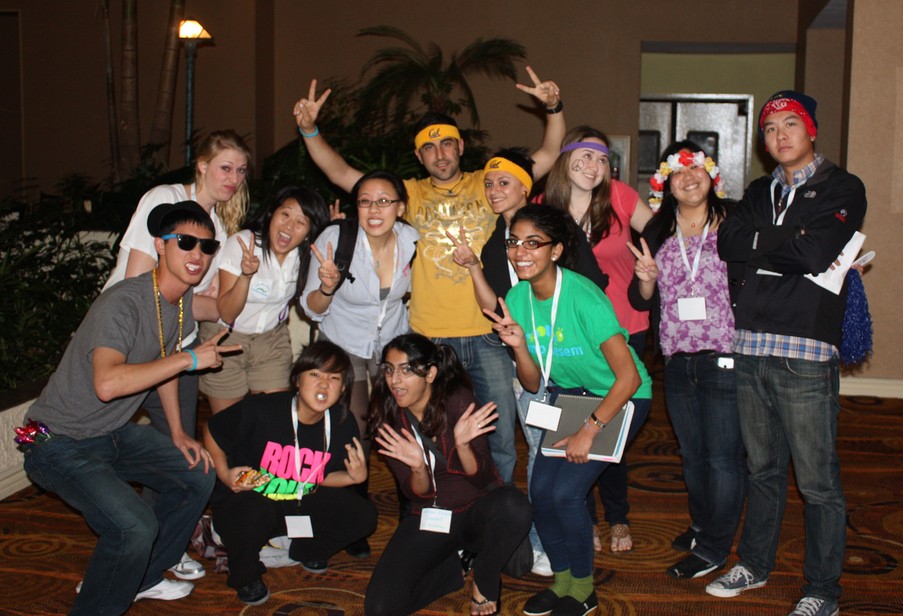
Representing Berkeley
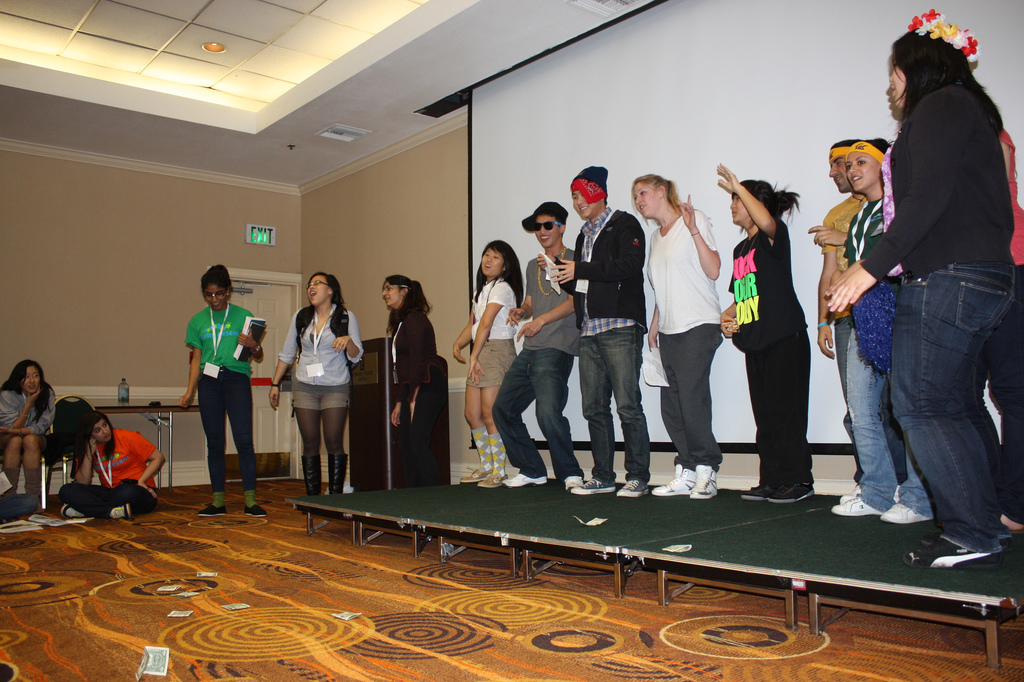
Tik Tok Berkeley style
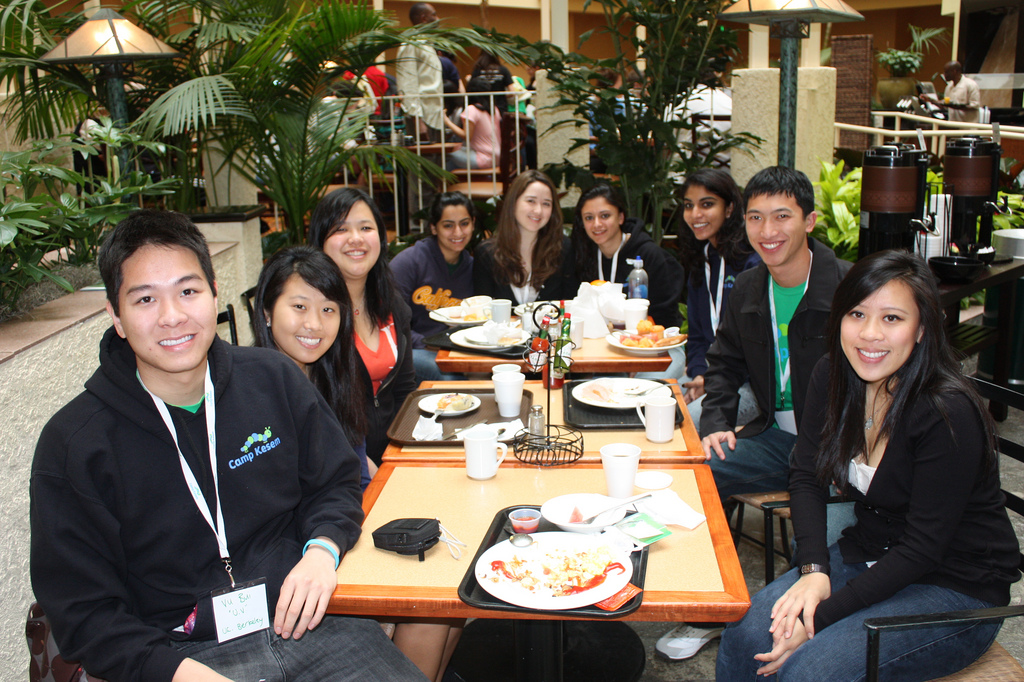
Happy 10th Birthday Camp Kesem!
(Photos by Vu Bui)